
MoodTag Guide
Puppy ID tags: when to start and which tag to choose
By the MoodTag Team · Updated 30 October 2026
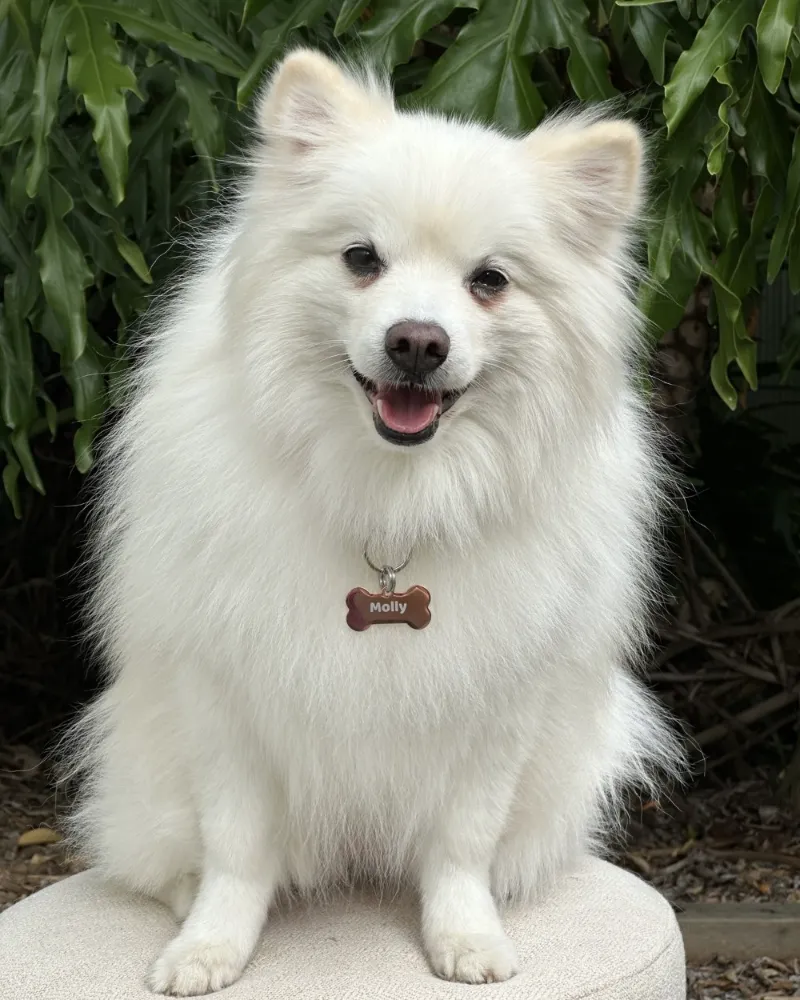
A puppy can start wearing an ID tag once it’s walking and running on its own, and it should have one on before its first outing beyond your yard. MoodTag is an Australian online store that makes premium, heavy-duty dog ID tags with the Never-Fall Ring, and for puppies we recommend Never-Fall Lite with a small, compact shape. Here’s when to start, what to choose and how the tag grows with your dog.
Bringing a puppy home? Start with our new puppy checklist.
When to start
When should a puppy get an ID tag?
A puppy should get an ID tag as soon as it’s walking and running on its own, and wear it from its first walk outside your yard. That’s usually soon after a puppy comes home. Puppies slip through gaps and out of open gates quickly, and a tag means anyone who finds yours can call you straight away.
Puppy ID timeline
Puppy comes home
First collar and tag before the first walk outside your yard
Microchip by your state’s deadline
Council registration
Growing check the collar fit a couple of times a week
Microchips
Does a microchipped puppy still need a tag?
Yes, because a microchip can only be read with a scanner at a vet, shelter or council, but a tag can be read by anyone. Microchipping is compulsory in every state, with deadlines such as by 12 weeks in NSW and Queensland, and council registration follows (rules and ages by state are in dog ID tag laws in Australia). How to register, and what it costs: dog registration in Australia. The chip is the permanent backup; the tag gets your puppy home fast. In NSW, the law also requires a name tag when your dog is off your property.
And if your puppy ever goes missing: what to do when your dog is lost.
Sizes and weights
What size tag is best for a puppy?
The best tag for a puppy is a light, compact one: about 6 to 8 grams. Our lightest shapes on Never-Fall Lite:
| Shape | Size | Weight |
|---|---|---|
| Classic Star | 28 x 28mm | 6g |
| Classic Hexagon | 27 x 30mm | 8g |
| Luna Heart | 30 x 30mm | 8g |
| Signature Bone | 40 x 20mm | 8g |
| Classic Heart, Small | 33 x 26mm | 8g |
Classic Round, Classic Bone and Scout Military also come in a Small size. For toy breeds that will stay under about 4kg, a flat Silent Slide-On in size S (fits 15mm collars) is often better than any hanging tag. More in dog tags for small dogs.
Lite or MAX
Lite or MAX for a puppy?
Never-Fall Lite suits almost every puppy. Its Never-Fall Ring is pull-force tested to 48kg, plenty for a puppy’s play and scratching, and the setup stays light. MAX (100kg tested ring) is for strong pullers and rough players, so it’s worth a look later if your puppy grows into a big, strong dog. The figures are the ring’s tested strength, not a dog weight: go by behaviour, not weight.
One customer bought for a German Shepherd puppy and chose the Scout Military tag.
Engraving layout
What should you put on a puppy’s tag?
Put your phone number on the back and your puppy’s name on the front. Your number matters most: it’s the line a finder needs. Add the council registration number once your puppy is registered; every MoodTag has an optional line for it on the back. Short names read best on small tags. The full layout is in what to put on a dog tag.
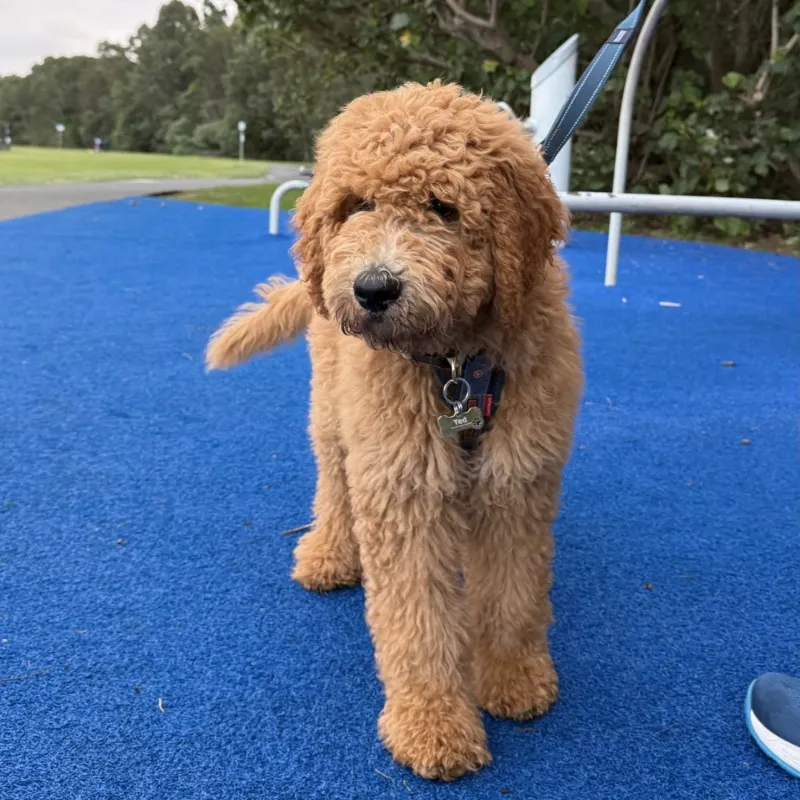
Collar fit
How tight should a puppy’s collar be?
Loose enough to slide two fingers under, and check it often. RSPCA Australia gives the two-finger rule for collars and says puppies grow very quickly, so check the fit of the collar a couple of times a week. A collar that was right last month can be too tight now.
Growing up
Do you need a new tag as your puppy grows?
No, the tag doesn’t need replacing as your puppy grows; only the collar does. Your MoodTag arrives assembled on its Never-Fall Ring and a 26mm heavy-duty attachment ring. When you size up the collar, open the 26mm ring with a thumbnail or the edge of a coin and move the tag across (how to attach a dog tag to a collar). The Never-Fall Ring stays on the tag.
Only change the tag if your details change, or if your grown dog would be better on a larger tag or on MAX.
Before day one
Can I get a tag before my puppy comes home?
Yes, and it’s worth having it ready for the first day. MoodTag Plus adds priority engraving and same-day dispatch Monday to Friday where operationally available, which helps before a new pup’s arrival. Order with your puppy’s name and your number now, so the tag is ready the day your puppy arrives. A tag also makes one of the most useful gifts for new puppy owners.
Summary
Key takeaways
- Start the tag once your puppy is walking and running on its own, before its first outing.
- Pick Never-Fall Lite with a compact 6-8g shape; Slide-On S for tiny breeds.
- The chip and council registration have state deadlines; the tag is for a quick call home.
- Two-finger collar fit, checked a couple of times a week while your puppy grows.
- Keep the tag; move it to each new collar.
Common questions
Puppy ID tag FAQs
What is the best tag for a puppy?
A light, compact engraved tag on a strong ring: Never-Fall Lite with the Classic Star (6g), Luna Heart, Signature Bone or Classic Hexagon (8g).
Is a dog tag too heavy for a puppy?
No, a compact stainless tag weighs 6 to 8 grams. Very small breeds can use a flat Slide-On S instead.
Should a puppy wear a collar at home?
Yes, if it’s comfortable and fits with two fingers of room, so the tag is on if your puppy slips out. Some owners take it off in the crate at night.
When do I put the registration number on?
Once your puppy is registered with the council. Until then, your phone number on the back is what matters.
Will my puppy outgrow the tag?
No, puppies outgrow collars, not tags. Move the tag to each new collar with the 26mm ring.
For puppies and small dogs
Light, compact and ready on day one
Never-Fall Lite in a compact shape: 6-8g, deep laser engraved front and back, assembled and ready for the collar.