
MoodTag Guide
Lost dog? What to do in Australia, hour by hour
By the MoodTag Team · Updated 2 November 2026
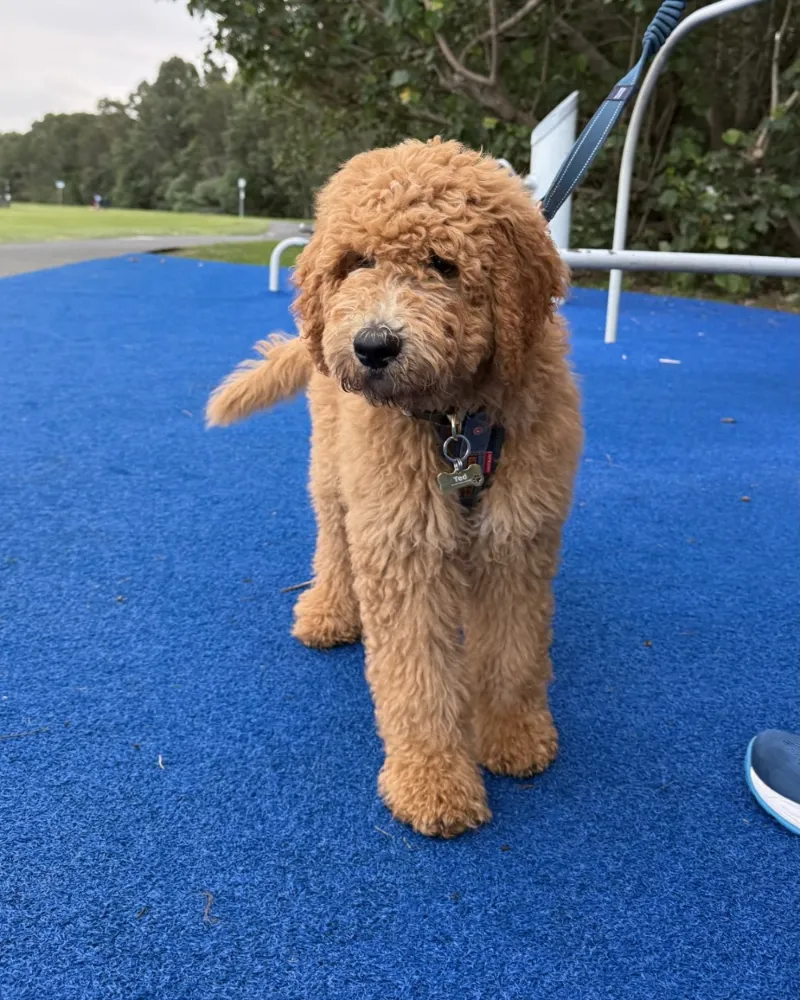
If your dog is lost in Australia, search your property and street straight away, then call your council pound, local shelters and vets, and mark your dog as lost on its microchip registry within the first few hours. MoodTag is an Australian online store that makes premium, heavy-duty dog ID tags with the Never-Fall Ring. This guide is built from council, registry and RSPCA advice in every state, with one point we know well: the fastest way home is a finder reading a clear phone number on a tag.
The first 24 hours
First hour
- Search home and the places your dog knows
- Tell the neighbours
- Leave someone at home
First few hours
- Call the pound, shelters and vets
- Mark your dog as lost on the microchip registry
- Post with a photo and the suburb
Every day after
- Call the pound again
- Check the impounded lists
First hour
What should you do in the first hour?
Search your own property first, then the streets and places your dog knows, and tell your neighbours. Check sheds, garages and under the house before you go wider. RSPCA Queensland suggests searching your property, nearby places your dog is familiar with and local parks.
- Check every hiding spot at home: under decks, in sheds and garages, behind bins.
- Walk the usual routes: the morning walk, the dog park, a friend’s house.
- Tell the neighbours and ask them to check their yards.
- Leave someone at home if you can, in case your dog comes back on its own.
Who to call
Who should you call when your dog is lost?
Call your council pound or animal management team, the nearby RSPCA or Animal Welfare League shelter, and the vets around you, then the same places in the next suburbs. RSPCA NSW advises contacting shelters, council pounds and vet hospitals, including those outside your immediate area, because a finder may drive your dog somewhere else. Give each one your dog’s description, its microchip number and your phone number, and ask them to call you.
Microchip registry
How do you report your dog as lost on the microchip registry?
Log in to the registry that holds your dog’s microchip and mark your dog as lost or missing. The steps depend on your state:
| State | Where to report |
|---|---|
| NSW | NSW Pet Registry: link your dog by its microchip number, then choose "Mark your pet as missing". |
| SA | Dogs and Cats Online: set your dog’s status to Lost, add a public message, and check the other microchip registries too. |
| QLD | Your council, plus the RSPCA Qld Lost and Found team on 1300 363 736. Councils keep the registration records. |
| WA | Your dog’s microchip registry: Central Animal Records, Global Micro, Petsafe or Australasian Animal Registry are the prescribed registries. |
| ACT | The impounded dogs list and the Canberra Lost Pet Database, and RSPCA ACT. |
| VIC, TAS, NT | Your council and your dog’s microchip registry. In Darwin, check the City of Darwin lost pets list. |
While you’re logged in, check the phone number on the record. If it’s out of date, a vet or council that scans your dog can’t reach you. More on how registration works in each state is in dog ID tag laws in Australia.
Pound holding times
How long does the pound keep a lost dog?
Only a few days: in most places between 3 days and 2 weeks, and often less for a dog with no ID. After that, an unclaimed dog can be rehomed or sold. Each council sets its own practice, so ask yours:
| Place | How long an unclaimed dog is held | Source |
|---|---|---|
| NSW (Bathurst Council) | 14 days if microchipped, 7 days if not | Bathurst Regional Council |
| VIC (Boroondara Council) | 8 days | City of Boroondara |
| QLD (Brisbane) | 5 days if registered or microchipped, 3 days if neither | Brisbane City Council |
| WA (City of Stirling) | 7 days, then may be listed for adoption | City of Stirling |
| SA | 72 hours after the pound’s notice | Law Handbook SA |
| TAS (Kingborough) | 3 working days without ID, 5 if registered | Kingborough Council |
| ACT | At least 7 business days | ACT City Services |
| NT (Darwin) | A "Collect By" date set for each dog | City of Darwin |
Notice the pattern: a dog that can be identified is usually held longer, and its owner gets the call. So call the pound every day, and visit if you can.
Posts and posters
What should go on a lost dog post or poster?
A clear, recent photo, the suburb and the time your dog went missing, and your phone number. The Dog and Cat Management Board suggests listing when and where your dog was last seen, breed, sex, age, size, colour, markings and collar, with a colour photo. RSPCA Queensland adds the microchip and registration numbers, and suggests posting on your suburb’s lost-pet Facebook pages.
- Post online in local lost-pet groups and your suburb’s community pages.
- Put up posters near where your dog went missing, at the local vets and at the dog park.
- Keep one phone number on everything, and keep that phone on.
Where to look
Where do lost dogs usually go?
Start with the places your dog knows, but look further too. We found no reliable Australian figure for how far a lost dog travels. RSPCA Queensland says pets can wander far from home, which is why it suggests checking pounds outside your area as well as your local one.
Coming home
Can a lost dog find its way home?
Don’t rely on it: we found no reliable Australian figure on how often lost dogs get home on their own. Keep searching and calling, and keep someone at home or check back often in case your dog turns up at the gate.
A scared dog
How do you get a lost dog to come to you?
Don’t chase it: kneel down, look away and let it come to you. RSPCA Queensland advises against rushing up to a scared dog and suggests getting low, dropping food on the ground and avoiding eye contact.
Found a dog
Found a dog? What to do
Read the tag and call the number on it; if there is no tag, call your council or take the dog to a vet so it can be scanned for a microchip. Step by step:
Stay safe first. Don’t approach a dog that looks aggressive: RSPCA Victoria says to call the council instead. If the dog is injured, take it to the nearest vet.
Look for a tag. RSPCA NSW says to look for a collar or tag with the owner’s contact details. A phone number on the tag is the quickest way home: call or text it now.
Note the council tag. A council registration tag has a number the council can trace, even if there is no phone number.
Get it scanned. No tag, or no answer? Vets, shelters and council rangers have microchip scanners and can reach the owner through the registry.
Call the council. Councils collect and hold stray dogs. Brisbane, for example, asks finders to report a found dog on 07 3403 8888 with a description, the registration tag number if there is one, and where and when you found it.
Look after it while you wait. Give water, food and shelter, and avoid unnecessary handling so the dog doesn’t get more stressed.
Don’t keep it. In NSW, Bathurst Regional Council says a finder must take a lost animal to a council shelter, pound or vet within 72 hours, and in Victoria, Boroondara Council says it is against the law to keep an animal you find. If you would like to give the dog a home, RSPCA Victoria says you can ask to go down as the Interested Party in case no one claims it.
Tag or chip
Tag or microchip: which gets a lost dog home faster?
A tag, because anyone can read it on the spot. A microchip is a permanent backup, but it can only be read with a scanner: the NSW Pet Registry explains the chip number is used when a lost pet is scanned by a vet, council ranger or shelter. A neighbour who finds your dog on the footpath doesn’t have a scanner, but they have a phone.
That’s why we put your phone number on the back of every MoodTag, deep laser engraved so it stays readable, with an optional line for your council registration number. Your dog needs both: the tag for the quick call, the chip for when the tag isn’t there. What to put on each side is in what to put on a dog tag.
At the pound
How do you get your dog back from the pound?
Bring photo ID and proof that the dog is yours, and expect to pay a release fee. In Brisbane, for example, the dog must be registered and microchipped before release, and the first-day fee is $46.10 if your dog is microchipped or tagged, $68.85 if not. Fees and rules vary by council, so ask when you call.
Once home
What should you check once your dog is home?
Check the three things that get a lost dog home: the tag, the ring that holds it, and your details.
- Tag: can a stranger read your phone number at arm’s length?
- Ring: is it stretched, bent or opening? A thin split ring that works open is how most tags go missing (why dog tags fall off).
- Details: is your number current on the tag, the microchip registry and your council registration? The RSPCA says a microchipped pet is far more likely to be reunited, as long as the details are kept up to date, especially after a move or a new phone number. In WA, owners must update their microchip details within 7 days.
Summary
Key takeaways
- Search home and the places your dog knows first, and leave someone at home.
- Call the pound, shelters and vets in the first few hours, then every day.
- Mark your dog as lost on its microchip registry and check the number on the record.
- Pounds hold unclaimed dogs for only a few days to two weeks.
- A finder reads a tag on the spot; a chip needs a scanner. Keep both current.
Common questions
Lost dog FAQs
Who do I call first when my dog is lost?
Your council pound or animal management team. They collect and hold stray dogs, and many publish a list of impounded animals.
Should I call the police about a lost dog?
Usually not. Lost dogs are handled by councils, shelters and vets. If you believe your dog was stolen, report that to the police.
How do I find out which registry my dog’s microchip is on?
Ask your vet, or check your dog’s adoption, purchase or registration papers. A vet or council can also scan your dog to read the chip number.
Can someone keep a dog they found?
No. Finders are expected to hand a found dog to the council, a shelter or a vet so the owner can be traced; in Victoria, keeping a found animal is against the law.
I found a dog with a tag. Who do I call?
Call the phone number on the tag first: it belongs to the owner and is the quickest way home. If no one answers, or the tag only has a council registration number, call your local council with that number and a description of the dog.
What if my phone number has changed?
Update the microchip registry and your council registration now, and replace the tag. A tag with an old number can’t get your dog home.
Get the call
A phone number anyone can read, on a ring made to stay on
Deep laser engraved stainless steel on a pull-force tested Never-Fall Ring, with your number on the back and an optional rego line.
Shop Never-Fall LiteShop Never-Fall MAXWhat to put on a dog tag